Bridging worlds
Originally from Kharkiv, I have lived and worked across multiple countries, cultures and professional fields. I speak English, Ukrainian and Russian.
My background spans academia, publishing and psychotherapy. Before training as a psychotherapist, I worked as a university researcher and editor and hold two MA degrees in the humanities. Since moving to the UK in 2007, I have built a psychotherapy and organisational practice grounded in both clinical depth and practical application.
I hold an MSc in Psychotherapy from the renowned Metanoia Institute in London and am an accredited member of the UK Council for Psychotherapy (UKCP). Additional training in EMDR, couples therapy and other therapeutic approaches inform my work with individuals, teams and organisations facing pressure, change and uncertainty.
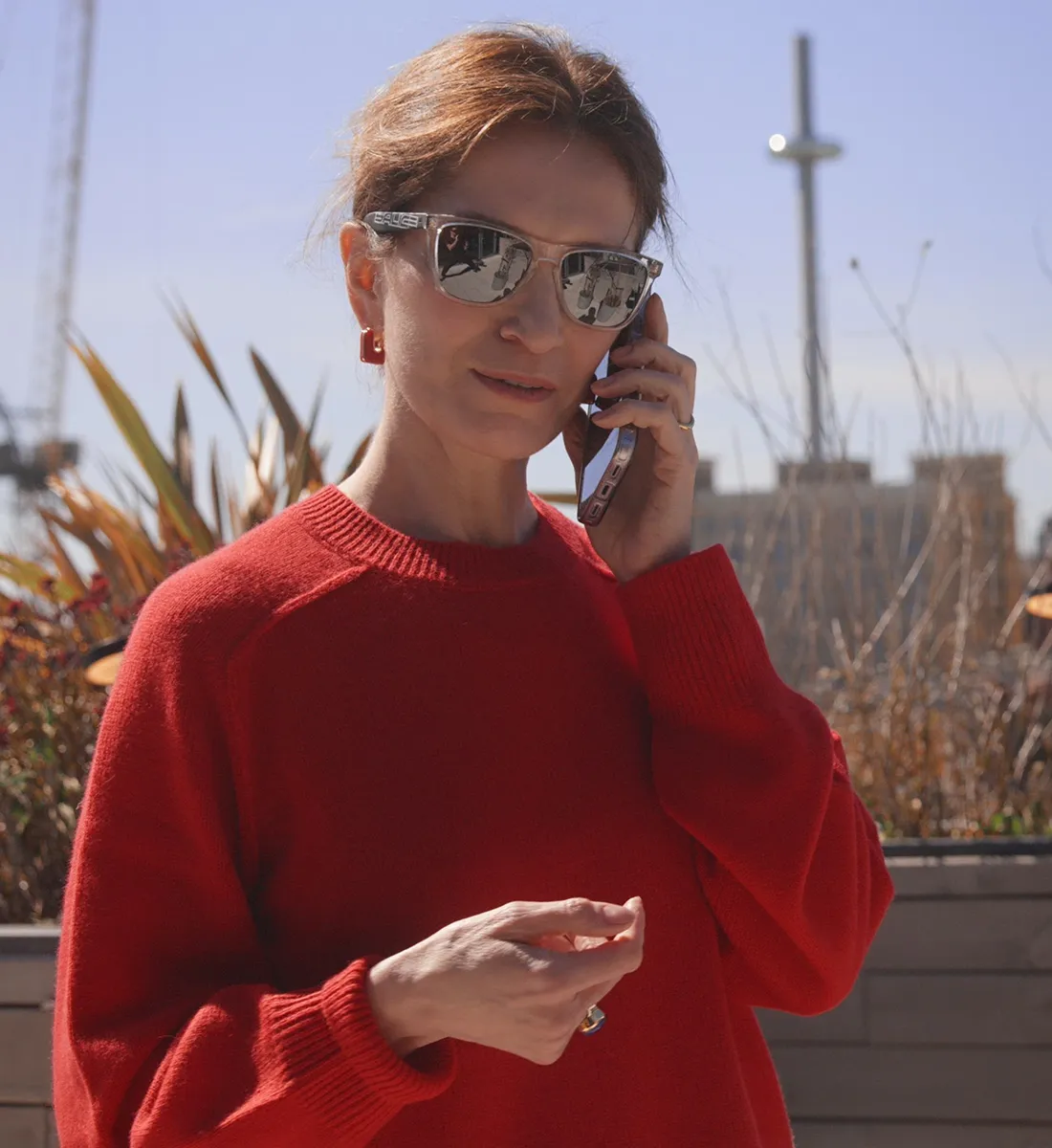
Alongside psychotherapy, I am a qualified yoga teacher. This reflects a longstanding interest in the relationship between mind, body and performance, and informs a holistic approach to resilience, recovery and sustainable functioning.
As well as my private practice, I delivered webinars and workshops for organisations and mental health professionals. I also taught at the Metanoia Institute and spent several years as a visiting lecturer on the post-MA Advanced Diploma in Integrative Psychotherapy programme at Regent's University London.
That changed in February 2022, when my focus turned back to Ukraine. The years that followed deepened my understanding of how people, teams and organisations function under sustained pressure, and led to the development of the ADAPT framework. Although born in a wartime context, the approach is relevant wherever organisations face prolonged uncertainty, disruption or crisis.

The development of ADAPT
In February 2022, following the full-scale Russian invasion, the immediate need in Ukraine was for crisis support. I began working in Kyiv with the Ukrainian staff of an international firm, and in another country with colleagues who had been evacuated there.
Initially, we had to explore a way of working when there was no life balance, to find a way of coping with a world turned upside down, and also find a way to help people through the stages of trauma and grief to land at a place of some stability. At first the task was to find a way of working in conditions where ordinary routines had collapsed: to help people cope with a world turned upside down and to move through trauma and grief towards some stability.
Out of this work, ADAPT took shape – a flexible, responsive approach that evolved alongside the situation itself. Rather than a fixed package, ADAPT is a modular framework that integrates psychological support for individuals, work with leadership teams and group educational formats, adapting in real time to changing conditions. Developed in response to the war in Ukraine, it is designed to be applicable in a range of high-pressure environments.
The workshops I’ve led in Ukraine, together with the webinars I’ve developed and delivered both remotely and during return visits, have become effective tools for guiding and sustaining teams — both in their work and in their personal lives.
The ADAPT model enables leadership teams in any crisis situation to function at their best, while maintaining a motivated team and a successful business in the midst of the uncertainty and rapidly evolving situations brought on by the crisis.